
Trauma & grief
A safe, non-verbal way to process difficult experiences, including bullying and the loss of a family member.
Sometimes it is easier to draw it than to say it. Our registered art therapists help children and teens express and work through what is hard to put into words.

Clinical art therapy is a form of psychotherapy that uses art-making to help children and young people express feelings, work through inner conflicts and build self-awareness. At Wonderful Mind, ANZACATA-registered art therapists offer individual and group art therapy in Melbourne’s northern suburbs (Doreen and Craigieburn clinics), with a trauma-informed, strengths-based approach. No artistic skill is needed. NDIS-funded sessions are available.
Clay, paint, masks and mark-making give children and young people different ways to show what they are feeling.


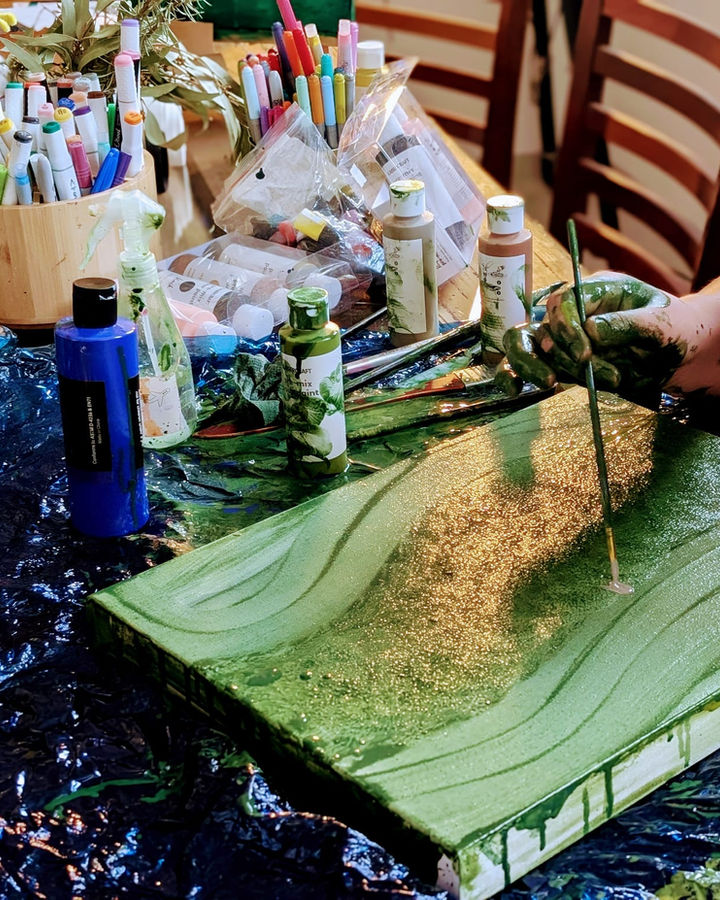


A safe, non-verbal way to process difficult experiences, including bullying and the loss of a family member.
Making sense of chaotic emotions and finding calmer ways to express them.
Helping young people explore who they are and build self-care skills.
Creative, play-based support for young children’s emotional and social development.
A flexible, sensory-friendly way to communicate that does not rely on words.
Belonging, peer connection and shared creativity in a non-judgemental group. See groups.
Each session usually starts with a check-in, moves into making art with materials your child chooses, and ends with gentle reflection and closure.

Clinical Art Therapist
Master of Art Therapy, Master of Speech Pathology
ANZACATA registered
Founder & Clinical Director
MA (Art Therapy), La Trobe University
Registered Art Therapist (AThR)Art, play and music therapy sessions are $193.99 per hour, with the first parent consultation billed as 1.5 hours. These therapies can be funded by the NDIS (Capacity Building, Improved Daily Living) when they support your goals. They are not covered by Medicare, but some private health funds offer rebates. See all fees.
Art therapy is a form of psychotherapy led by a qualified art therapist. It uses art-making as a way to communicate and process feelings, alongside conversation. The focus is on expression and meaning, not artistic skill.
Not at all. Children use paint, clay, collage and drawing to show what is going on inside. There is no right or wrong.
Children and young people experiencing trauma, grief, anxiety, bullying, identity questions or big emotions, and children who find talking hard. We also run group art therapy.
It can be funded by the NDIS under Capacity Building supports. It is not covered by Medicare, but some private health funds offer rebates.
Yes. Our art therapists are registered with ANZACATA (the Australian, New Zealand and Asian Creative Arts Therapies Association).
Child-centred play therapy and parent-led filial therapy for big feelings and hard experiences.
Registered music therapy for communication, regulation and connection.
Therapy for anxiety, big feelings, trauma and behaviour, for children, teens and families.
Our adult & aged care service offers art therapy for adults and older people, in clinic, at home or by telehealth, with Support at Home, NDIS and Medicare options.
Tell our intake team what you are noticing. We will match your child with the right clinician, or a small team if they need more than one kind of support.